Globalfoundries Starts Expansion of Its Dresden Chip Plant
GlobalFoundries (GF), Europe’s largest semiconductor foundry, officially began expanding its German facility in Dresden on Tuesday, March 17, marking the start of the next phase of its “SPRINT” expansion project.
Together with its general contractor partner Exyte, the company celebrated the symbolic start of construction on its premises.
The goal is to increase the production capacity of the plant in Saxony’s capital by more than 110,000 wafers per year by the end of 2028 and to raise annual capacity to well over one million 300mm wafers. In doing so, GF is responding to the growing demand for high-performance, energy-efficient semiconductors while simultaneously strengthening supply security for customers in key industries such as the automotive sector, industrial automation, and communications technology. To achieve this, the existing cleanroom and laboratory space will be expanded by approximately ten percent to about 65,000 square meters.
As part of the SPRINT project, GF plans to invest 1.1 billion euros in the expansion of the Dresden site. The project is being significantly funded by the German federal government and the Free State of Saxony under the European Chips Act and strengthens the region’s role as the core of the Silicon Saxony microelectronics cluster.
“Today’s official groundbreaking is a clear signal: GlobalFoundries continues to make long-term investments in Dresden and secures high-quality jobs in the region,” says Dr. Manfred Horstmann, General Manager and Senior Vice President at GlobalFoundries. “With SPRINT, we are creating additional capacity to meet the growing European demand for chips in key industries such as automotive, industrial automation, defense, aerospace, and medical technology. At the same time, the project will lay the foundation for future innovations in areas such as energy-efficient electronics, artificial intelligence, and quantum technology.”
“With SPRINT, we are not only expanding a fab; we are strengthening a central pillar of the European semiconductor industry,” emphasizes Jürgen Raschendorfer, a member of the executive board of the Stuttgart-based company and Chief Operating Officer responsible for Europe. “Exyte has been supporting the development of this site since the groundbreaking nearly three decades ago—and we are proud to once again make a decisive contribution to the future of GlobalFoundries in Dresden. This project underscores how closely and trustingly GlobalFoundries and Exyte have been collaborating for many years.”
- Outlook for the next construction phases
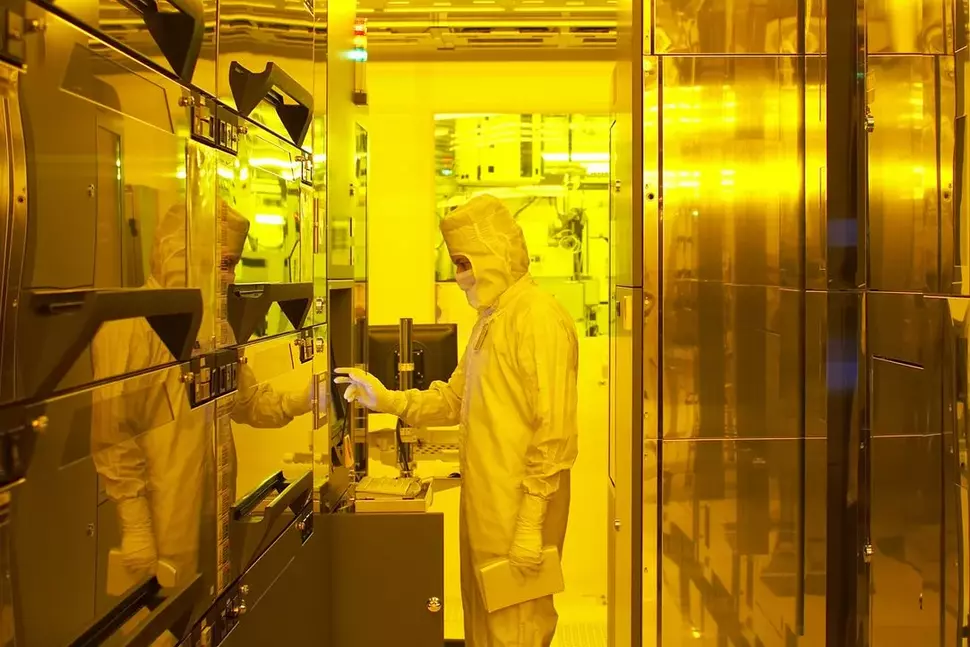
The construction phase that has now begun includes the expanded structural work and the construction of additional cleanroom and technical areas. In parallel, an existing building will be converted into a cleanroom for wafer manufacturing and connected to the 25-kilometer-long highly automated transport system, which moves wafer boxes dust-free, precisely, and around the clock between the process facilities.
The first new manufacturing tools are scheduled to be installed as early as the second half of 2026, before GlobalFoundries gradually transitions into the production-oriented qualification and ramp-up phase. The goal is to fully integrate the additional capacity into ongoing operations by the end of 2028, thereby making a significant contribution to the supply security of European industry.
The rapid approval process for SPRINT is particularly noteworthy. Through close coordination between the city, state, and federal governments, the necessary steps were completed very quickly—a key location factor in ensuring that large-scale projects in the semiconductor industry can move swiftly from planning to implementation.
Source: Silicon Saxony e. V.