25 years of ROTOP Pharmaka Dresden and launch of the largest radiopharmaceutical investment program in Germany
ROTOP Pharmaka GmbH celebrated its 25th anniversary on November 21, 2025 and at the same time announced the most strategically important growth decision in its history.
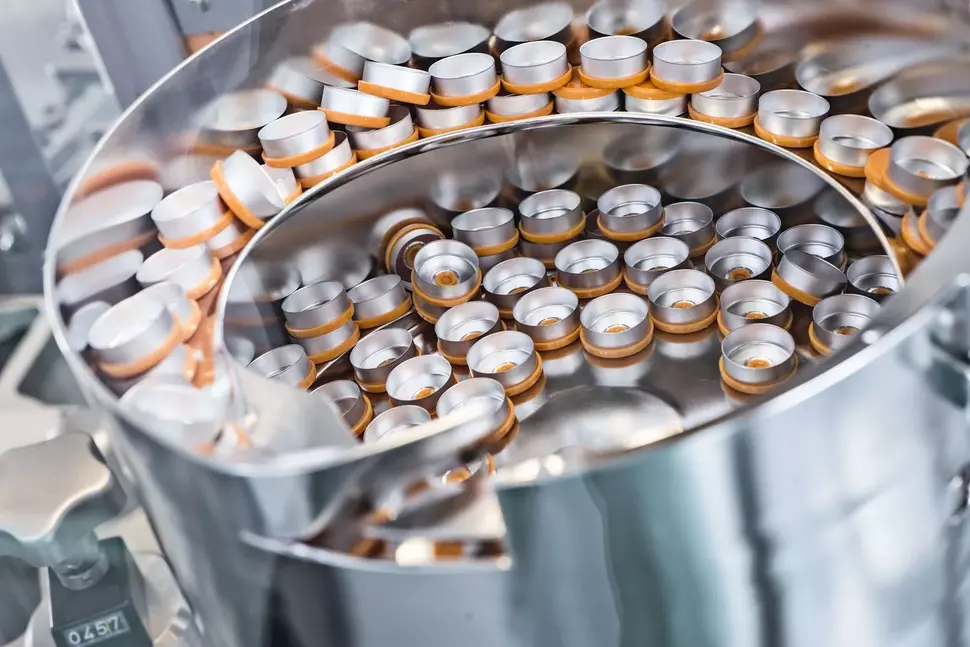
The company is currently investing an amount in the double-digit millions, the highest amount currently invested in the radiopharmaceuticals sector in Germany, in order to significantly expand its production and development capacities at the Dresden-Rossendorf site. The investment package is roughly equivalent to twice the annual turnover and marks the beginning of the next growth phase. The plan is to build two new, highly automated factories for diagnostic and therapeutic radiopharmaceuticals, which are to be put into operation in stages from 2028.
"Here in Rossendorf, we are investing in the largest radiopharmaceutical project currently underway in Germany. It is also the largest investment program in our company's history," says Jens Junker, Managing Director and co-partner of ROTOP Pharmaka GmbH. "This scale cannot be achieved alone. Without strong partners from private capital, the public sector, associations and the expertise of our employees, such a step would not be possible."
- ROTOP is growing faster than the market
For ten years, ROTOP has recorded growth that is well above the market average. During this time, the workforce has grown from forty to two hundred and thirty employees from fifteen nations. The company achieves annual growth of around 15 percent and contributes to the care of around one million patients per year with the radiopharmaceuticals manufactured here. The radiopharmaceuticals are used for diagnostic applications in the fields of functional diagnostics and cancer diagnostics and are supplied to customers in Germany, Europe and the United States. The increasing demand is now leading to bottlenecks at the site. As Junker explains, the growing need for space in the office and laboratories shows how dynamically the company is developing and how much the team has grown in the meantime. Investments in new space are therefore absolutely necessary and at the same time a signal for the future viability of the company.
- Innovation at the interface of research, approval and care
The current investment program will create an integrated cluster for production and development that will strengthen the existing diagnostics production based on technetium-99m and at the same time create new European capacities for therapeutic radiopharmaceuticals. The global market for so-called theranostics is growing rapidly. Several hundred clinical trials are underway worldwide and billions have been invested in the corresponding technologies in the United States within a short space of time. Junker sees ROTOP at the center of this development. In the coming years, there will be a large number of new therapies that will require companies capable of producing tens of thousands of patient doses per year. This is precisely what ROTOP is positioning itself for. In the long term, the company is pursuing the goal of developing its own therapeutic radiopharmaceutical that can be used to treat patients worldwide and bears the "Made in Dresden" designation of origin.
- From Rossendorf isotopes to global radiopharmaceuticals
ROTOP's growth is supported by investors who fit in with the medium-sized company identity. The company deliberately decided against international financial investors and instead chose German partners, including GENUI from Hamburg, SHS from Tübingen and WMS Wachstumsfonds Mittelstand Sachsen.
"ROTOP is a real success story: the company has been growing at an above-average rate in a very dynamic market for years and is now investing in the largest current radiopharmaceutical project in Germany. We are pleased to support the management in this important expansion - and congratulate them on their 25th anniversary!" explains Dr. Oliver Serg from GENUI. "What is being created in the greater Dresden area in the radiopharmaceutical sector is impressive and a great opportunity for Germany. We are delighted to be able to support ROTOP with capital and our network," says Dr. Cornelius Maas, Partner at SHS Capital.
These partners now jointly hold a majority stake in the company, while Junker remains actively involved in the company as a strategic minority shareholder. He emphasizes that international competitiveness in the field of radiopharmaceuticals is only possible with long-term oriented capital partners. At the same time, ROTOP is appealing to politicians. While microelectronics receives billions in state funding, there is no comparable program for radiopharmaceuticals, even though they play a similarly systemically relevant role in modern oncology.
ROTOP is one of the few sites in Germany where new radiopharmaceuticals can be developed from research to development to clinical application. The basis for this is the expertise at the site as well as the cooperation with local and national partners and users. . ROTOP is also active in the nukliD radiopharmaceutical network, which connects researchers, industrial partners, regulatory authorities and clinical institutions in the field of radiopharmaceuticals. This creates a unique working environment for the company's employees. Junker emphasizes that ROTOP not only develops innovation, but also brings it directly to patients, thus occupying a special position in Germany.
- ROTOP brings innovation directly to patients
ROTOP is currently working on a new radiopharmaceutical for the diagnosis of prostate cancer, which has already been approved in Switzerland and the UK and is currently in the further European approval process. The tracer is intended to represent a clinically equivalent but more cost-effective alternative to existing preparations and thus expand access to modern diagnostic procedures. However, the approval process is challenging, as radiopharmaceuticals are subject to particularly strict regulatory requirements. Junker emphasizes that regulation is not an obstacle, but the basis for trust and patient safety. It is important that new preparations reach clinical care and do not get stuck in the testing process.
On the occasion of its 25th anniversary, ROTOP pays tribute to its founder Monika Johannsen, who, together with a small team, dared to make a new start in 2000 after the company had temporarily disappeared from the market due to takeover structures of Western corporations. Junker emphasizes that without this courage, today's development would not have been possible and that today's growth strategy is based on this pioneering achievement.