New material from Dresden for bioelectronics
This bio-inspired hydrogel is the first of its kind to combine biochemical and electrical signal control. It binds signaling molecules that stimulate cell growth and can selectively release them again using electrical impulses. It also serves as a sensor for measuring biological parameters such as oxygen levels.
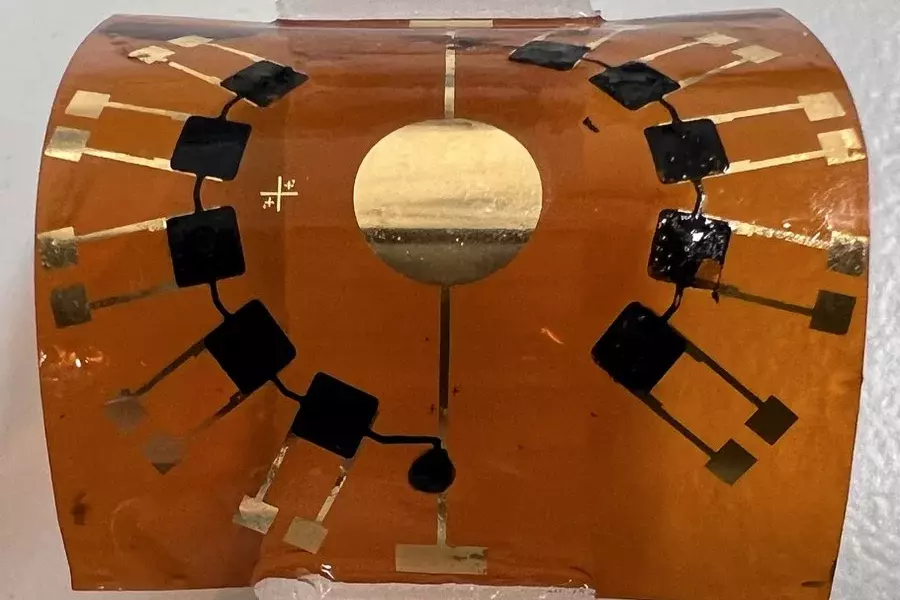
Many cutting-edge medical technologies rely on the seamless integration of biological and electronic systems. This requires materials that are as soft as possible, electrically conductive, and biologically active—properties that have been difficult to combine until now. Researchers in Dresden have now succeeded in developing such a material. This approach opens up new possibilities for medical devices and implants, such as those used to treat damage to the nervous system.
- A Material Modeled After Nature
For implants to be well-tolerated by the human body, their mechanical properties must resemble those of the surrounding tissue. For applications in the nervous system, this means that ideal materials should be soft, flexible, and electrically conductive at the same time. Based on the natural cellular environment (extracellular matrix—ECM), the researchers developed a water-based material (hydrogel) that mimics key properties of the ECM while also being electrically active. One component of the ECM is glycosaminoglycans, which consist of strongly negatively charged, long-chain sugar molecules. The researchers combined these with star-shaped polyethylene glycol (starPEG) to form a three-dimensional network capable of binding water and other substances. They then supplemented this bio-inspired hydrogel with the semiconducting organic polymer PEDOT. The integration of the conductive polymer ultimately resulted in a new, promising material (PEDOT:sGAGh) suitable for applications at the interface of biomedicine and electronics.
- Conductive, controllable, and biologically active
In a series of experiments, the researchers demonstrated that PEDOT incorporates into the hydrogel without destroying its nanostructure. Small conductive clusters formed within the material that can transmit electrical signals. At the same time, the material remains soft and water-based—properties that are crucial for use within the body. Electrical conductivity can be precisely adjusted, for example by varying the amount of PEDOT and the number of negative charges in the material. The researchers then tested whether bioactive molecules could also be bound within the material and subsequently released. This is relevant, for example, for implants designed to deliver active ingredients in the body in addition to providing electrical stimulation. “Using weak electrical signals, we can specifically control whether growth factors remain bound in the material or are released. Our cell culture experiments show that the factors are not altered by the electrical stimulation and remain biologically active: After controlled release of the growth factor VEGF, the cultured cells formed tube-like structures—an early stage of blood vessel formation,” explains Dr. Teuku Fawzul Akbar, a scientist in Prof. Minev’s group and first author of the publication.
In addition to releasing signaling molecules, the material can also serve as a sensor. The team demonstrated this by measuring oxygen levels. In a biohybrid circuit, the researchers showed that when oxygen levels drop, an electrical signal is triggered that controls the release of a growth factor. This, in turn, can stimulate the growth of nerve cells in the cell culture. “Our material is the first to combine the soft properties of biological tissues with their natural mode of communication: signal transmission via biomolecules and electrical impulses. This is an important step toward the development of new biomedical devices and implants,” says Dr. Christoph Tondera, research group leader at the Leibniz Institute for Polymer Research Dresden and the CRTD at TUD.
- Better brain-computer interfaces and smart implants
The hydrogel translates a principle from nature into technology by combining biochemical signaling with electrical control. In the future, the material could be used, for example, in electrode coatings or bioelectronic components. In the long term, the technology is expected to help improve brain-computer interfaces. One conceivable medical application is brain implants that not only measure or stimulate, but combine both functions. This could improve treatment for patients with epilepsy or Parkinson’s disease. “Next, we will test the long-term stability, performance, and biocompatibility of our material. The goal is to develop a prototype as quickly as possible and test it under clinical conditions,” says Prof. Ivan Minev, who heads the Electronic Tissue Technologies Chair at the Else Kröner Fresenius Center (EKFZ) for Digital Health at TUD as well as the Leibniz Institute for Polymer Research Dresden. As a first step, Prof. Minev’s team is already collaborating with neurosurgeons at Dresden University Hospital as part of the COATARRAY project. Existing electrodes for deep brain stimulation are to be further developed using the new material.
- Participating Research Institutions and Funding
The Chair of Electronic Tissue Technologies is based at the EKFZ for Digital Health at Dresden University of Technology (TUD) and the Leibniz Institute for Polymer Research (Leibniz-IPF) in Dresden. Scientists from the Dresden Integrated Center for Applied Physics and Photonic Materials (DC-IAPP), the Center for Regenerative Therapies (CRTD) at TUD, and the Max Planck Institute of Colloids and Interfaces in Potsdam were also involved in the research. The work was funded by the European Research Council (ERC) and the German Research Foundation (DFG).