The ATHENE-1 Satellite Launches with a Wealth of Expertise from Saxony
The small satellite ATHENE-1 was launched into space on October 1 from Vandenberg Space Force Base in California as part of the Transporter-18 mission aboard a SpaceX Falcon 9 rocket. Of particular note from Saxony’s perspective: About one-third of the technologies used in ATHENE-1 come from Saxony.
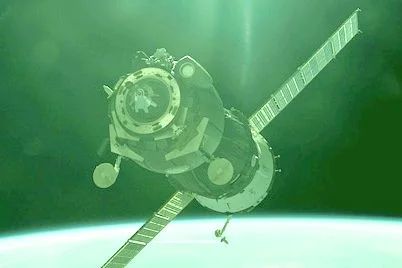
ATHENE-1 is the centerpiece of the SeRANIS (Seamless Radio Access Networks for the Internet of Space) research project, which is led by the Bundeswehr University and funded by the Bundeswehr Center for Digitalization and Technology Research. LuxSpace, a subsidiary of the Bremen-based space technology group OHB, and the University of the German Armed Forces in Munich jointly developed and built the satellite, which weighs just under 300 kilograms. Other partners involved in the ATHENE-1 project include the Saxon company NEOSAT and the space startup Talos, which has offices in Munich and Dresden.
It is scheduled to be launched into low Earth orbit (LEO), where it will serve as a technology and testing platform for a total of 15 scientific experiments. The focus is on satellite-based communication and networking, reconnaissance and sensor technology, navigation, as well as AI and data processing directly on board the satellite. This includes methods for detecting, locating, and countering interference.
With their innovative technologies—in communications engineering, microelectronics, and signal processing—Saxon companies are making a significant contribution to the project’s success to date. Key technological components are “made in Saxony.” In this way, Saxon companies are gaining practical experience in orbit, upon which further applications and collaborations can be built. The SAXON-1 consortium intends to continue this development—all the way to an independent mission originating from Saxony.
The mastermind behind the ATHENE-1 mission, Prof. Andreas Knopp, hails from Bad Elster in the Vogtland district. He holds the Chair of Information Processing at the University of the German Armed Forces in Munich. There, Knopp is also a co-founder and co-spokesperson for the SPACE Research Center, which drives interdisciplinary research on space technologies. SeRANIS is one of the center’s flagship projects. In 2025, Knopp played a key role in OHB’s successful acquisition of the “TechniSat” site in Schöneck / Vogtland.
- Background
The aerospace industry—which in Saxony comprises around 160 companies and research institutions with more than 7,000 employees generating approximately 1.4 billion euros in revenue—is of strategic importance for Europe’s technological sovereignty.
Saxony’s high-tech ecosystem also makes an important contribution to meeting the German Armed Forces’ needs in the field of space technology. Saxon companies achieve the greatest possible added value with critical, market-relevant components and subsystems. It is precisely in this area that they are characterized by a triad of speed, quality, and industrial relevance.
Saxony is particularly well-positioned in the following areas:
- resilient and secure satellite communications,
- secure microelectronics,
- onboard processing (direct processing of data at the point of collection), routing, and reliable data paths,
- space qualification through testing and validation (existing testing, simulation, and qualification infrastructures),
- high-performance materials and lightweight construction.
Just last week, the Munich-based technology group Rohde & Schwarz announced that it would acquire the Dresden-based deep-tech companies NEOSAT and PHYTRONIC. The two Saxon companies develop technologies for multi-antenna satellite systems and are working on the global networking of machines and sensors via satellite, as well as innovative transmission methods in space. With this expertise from Saxony, Rohde & Schwarz aims to strengthen its position in the strategically growing market of the space industry.