Research on complex electronic systems
The scientists at the division Adaptive Systems Engineering EAS of Fraunhofer IIS in Dresden are working on key technologies for the networked world of tomorrow. The focus here is on the design of complex electronic systems and tried-and-tested AI applications for companies.
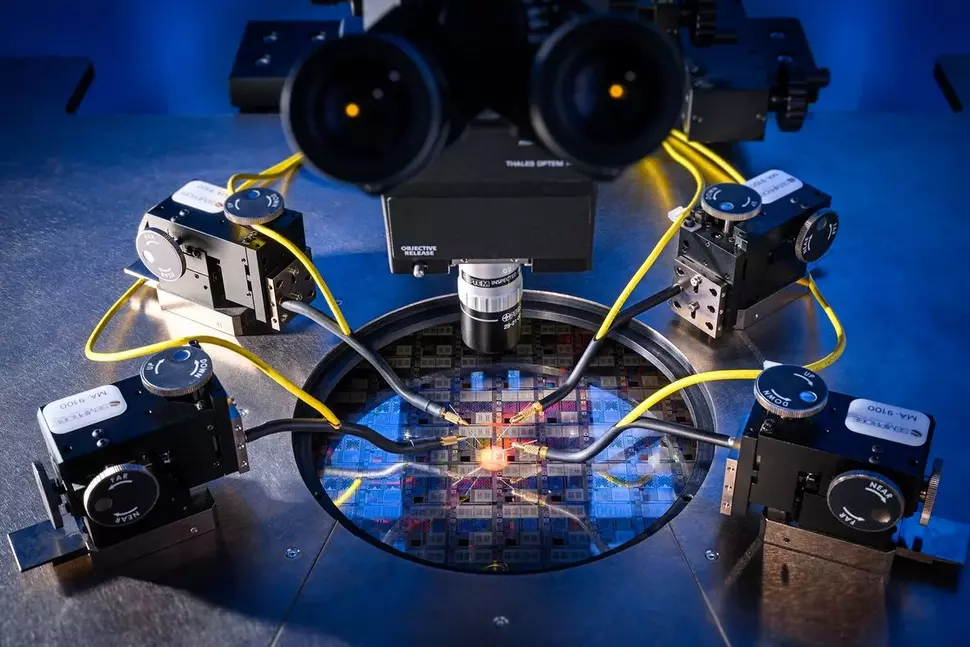
Adaptivity is an indispensable characteristic for the networked world of tomorrow. Intelligent electronic components can recognize and evaluate changes in their environment or in themselves and react accordingly. As a partner to industry, Fraunhofer IIS in Dresden develops key technologies for such adaptive systems and offers innovative and robust solutions.
In addition, the focus is on the development of intelligent sensor technology, the analysis of large amounts of data and new approaches for the control of automation processes. Tailored to the current and future requirements of the economy, adaptive and robust technological solutions are developed, particularly in the areas of mobility and industrial automation.
The research topics at a glance
- System level design
- Reliability and service life prediction for ICs and electronic systems
- Integrated sensor electronics
- System integration (from SiP to 3D)
- Optical sensor technology
- Self-learning condition monitoring systems
- Radio-networked automation
- Energy management
IC design skills
The increasing miniaturization of electronics, the requirements for (data) security, new production technologies and more and more functions in the smallest of spaces pose particular challenges for their performance and the design process.
The work of the Fraunhofer IIS EAS in Dresden is therefore focused on countering the constant miniaturization of semiconductor components and the growing complexity of circuits with new design concepts. The aim is to ensure fast, resource-saving, error-free and safe development of electronic systems.
On the other hand, the focus is also on new technologies under the aspect of "More than Moore". These allow a wide variety of assemblies to be combined in one component, which, among other things, enables higher performance with more efficient energy utilization. With its design expertise, Fraunhofer IIS / EAS also develops high-performance technical systems that use innovative approaches to master particularly complex tasks.
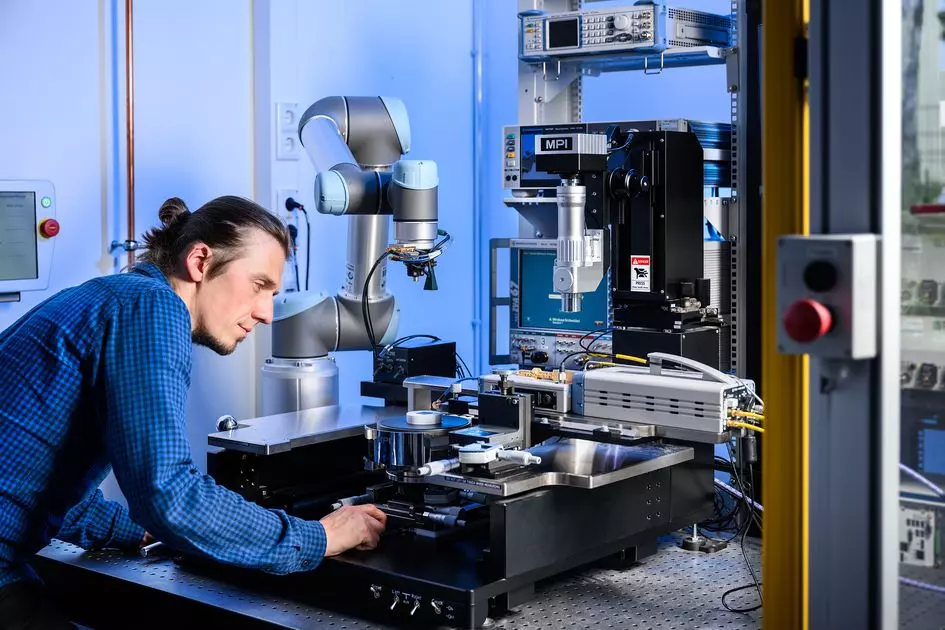
Field-tested AI applications for businesses
One of the main goals of AI research at Fraunhofer IIS-EAS is to make research results accessible to small and medium-sized enterprises. To this end, the institute has established the ATKI (Application and Test Center for AI) in Dresden. It is the central point of contact at Fraunhofer IIS/EAS for the profitable use of artificial intelligence (AI) in SMEs. The ATKI offers tailor-made solutions for small and medium-sized enterprises, which face a number of challenges in this area, enabling them to use AI and thus secure competitive advantages.
Fraunhofer IIS-EAS sees artificial intelligence as part of a comprehensive "toolbox" that can be used to solve the challenges of customers and partners in the best possible way, depending on the task at hand. The institute pursues various technological approaches related to AI – from pure data analysis with algorithms to private cloud and edge solutions to the implementation of projects using powerful AI computing hardware (embedded systems).
Examples of AI projects at Fraunhofer IIS-EAS include:
- Universal sensor platform for IoT and AI systems
- Increasing production efficiency and optimizing processes through the use of AI algorithms
- Industrial wireless networks: AI-based, reliable monitoring and early detection of faults in wireless communication
- Structure-integrated intelligent sensor/actuator technologies for monitoring and adaptive control of machine tools and production processes