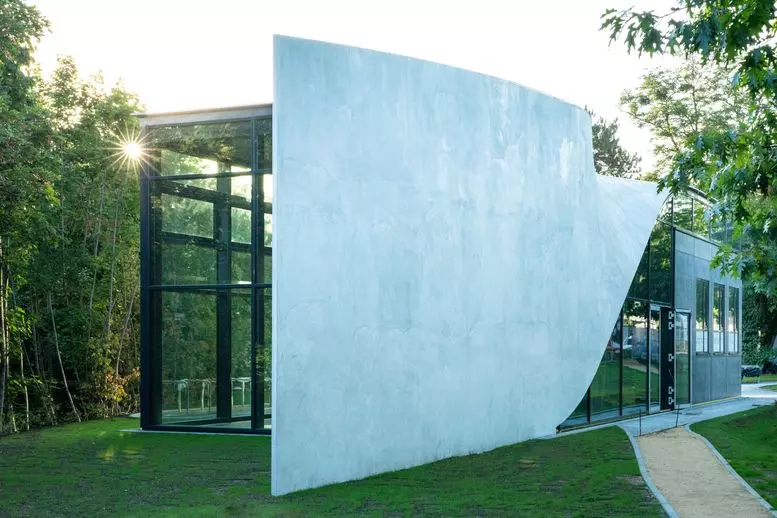
Pioneer in carbon concrete research
It began in Dresden with intensive basic research from the end of the 20th century and the first practical projects at the beginning of the 21st century. The main driver in the area of R&D was and is the Institute of Concrete Structures at the Dresden University of Technology (TU Dresden).
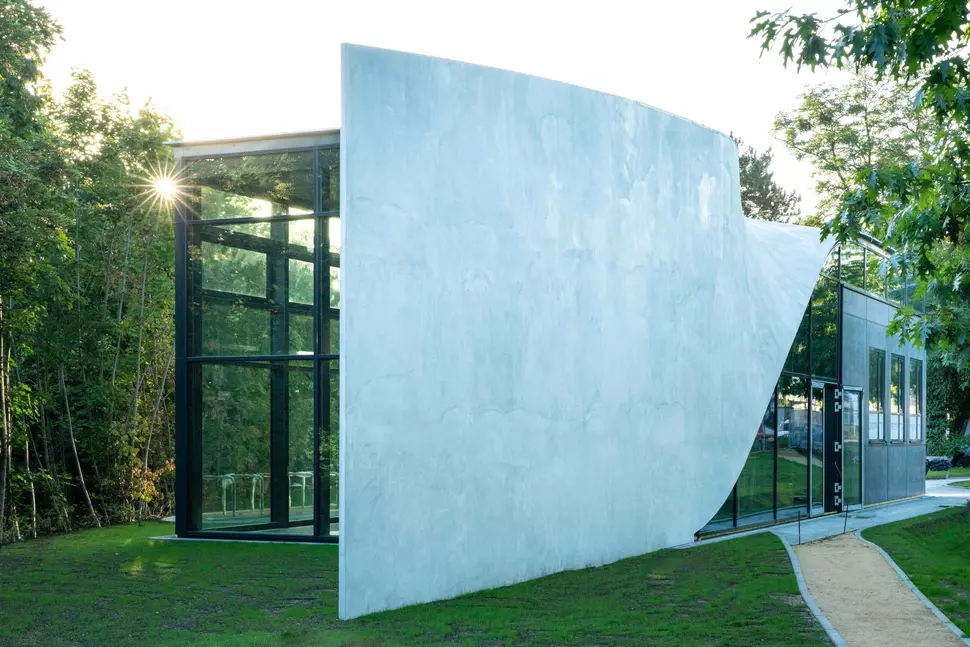
The Institute of Concrete Structures (IMB) deals with the mechanical properties of reinforced concrete in all its facets - various reinforcements, concretes from lightweight to high-strength, stresses from static permanent load to highly dynamic, new and existing buildings - in experiments and theory at material level through to the complete structure.
Current research focuses on
- Properties of new generation concretes and new construction methods,
- the influence of high load velocities on material and component resistance,
- the use of alternative reinforcement materials
- the bond between reinforcement and matrix or
- the mapping of component reactions in simulations with finite or discrete elements.
There are four working groups at the institute on various research topics. Currently, the largest focus, e.g. in terms of the number of projects, is on researching and introducing textile or carbon concrete (C³-Carbon Concrete Composite) into practice. Another research focus is the investigation/monitoring of materials and components (e.g. bridges) under high load speeds using digital solutions.
Institut für Massivbau, TU Dresden